Waste Management and Recycling AIoT Applications
AIoT Solutions for Smart Waste Collection, Recycling Automation, Material Traceability, and Environmental Operations
AIoT Applications Across Waste Management and Recycling Operations
Waste Management & Recycling Systems are becoming increasingly data-driven as municipalities, environmental service providers, recycling operators, industrial facilities, and resource recovery organizations seek better visibility into collection operations, material flows, equipment performance, and environmental compliance.
WasteOps AI applies AI, Internet of Things (IoT), and AIoT technologies across the complete waste lifecycle, including municipal solid waste (MSW) collection, commercial waste services, hazardous waste handling, construction and demolition (C&D) waste processing, material recovery facilities (MRFs), organics processing, electronic waste recycling, waste-to-energy (WtE) facilities, and landfill monitoring.
AIoT-enabled waste management connects distributed operational assets such as collection trucks, roll-off containers, dumpsters, recycling equipment, weighbridges, conveyors, compactors, environmental devices, RFID-tagged containers, and facility infrastructure. These connected systems generate operational data that AI analytics transform into actionable system for routing optimization, material tracking, predictive maintenance, recycling quality improvement, and compliance management.
Modern waste and recycling operations require more than basic asset monitoring. Operators need integrated system across collection fleets, recycling processes, environmental monitoring systems, and enterprise applications. AIoT provides the technical foundation by combining:
AI analytics for prediction, classification, anomaly detection, and optimization
IoT devices for real-time operational data collection
RFID and BLE technologies for asset and material identification
GPS and telematics for fleet visibility
Computer vision for waste sorting and contamination analysis
Edge computing for real-time processing at operational sites
Cloud and private server systems for enterprise-scale analytics
WasteOps AI focuses on practical AIoT implementations that help organizations improve operational efficiency, increase material recovery rates, enhance traceability, and support environmental compliance across diverse waste streams.
Waste and Recycling AIoT Application Areas
Waste Management & Recycling Systems require different AI + IoT capabilities depending on waste type, processing environment, regulatory requirements, and operational objectives.
Major AIoT application areas include:
Municipal solid waste (MSW) collection optimization
Hazardous waste tracking and compliance management
Construction and demolition waste processing
Industrial and commercial waste fleet system
Organics and compost processing monitoring
Single-stream recycling automation
Electronic waste (e-waste) traceability
Waste-to-energy facility monitoring
Yard waste and green waste management
Each application combines specific IoT devices, wireless connectivity technologies, AI models, and operational software systems to address waste-specific challenges.
Municipal Solid Waste (MSW) Collection AIoT Applications
Municipal solid waste collection involves complex coordination between collection vehicles, residential and commercial waste containers, dispatch centers, transfer stations, and municipal service systems. AIoT technologies improve collection efficiency by providing real-time visibility into vehicle locations, container conditions, service demand, and operational performance.
Traditional waste collection models often rely on fixed routes and scheduled pickups. While effective for predictable service areas, fixed scheduling can create operational inefficiencies when waste generation patterns change due to seasonal demand, commercial activity, weather conditions, or special events.
AIoT-enabled smart waste collection combines GPS fleet tracking, smart bin devices, route optimization algorithms, GIS mapping, and fleet telematics to create adaptive collection operations.
AI-Based Collection Route Optimization
AI-driven route optimization analyzes operational data from multiple sources, including:
Vehicle GPS locations
Historical collection patterns
Container fill-level measurements
Traffic and road conditions
Driver behavior data
Service schedules
Vehicle capacity information
AI models can recommend optimized collection routes that reduce unnecessary vehicle movement, improve service coverage, and support better fleet utilization.
Dynamic waste collection route planning
Real-time route adjustment
Collection priority optimization
Vehicle capacity balancing
Fuel and idle-time analysis
Driver performance analytics
GIS integration allows waste operators to visualize collection zones, service locations, container density, and fleet movement patterns.
Smart Bin Monitoring and Fill-Level Analytics
Smart waste bins equipped with IoT devices provide real-time information about waste accumulation levels. These systems help operators transition from fixed collection schedules to demand-based collection strategies.
Smart bin IoT technologies include:
Ultrasonic fill-level devices
Weight-based monitoring devices
Temperature devices
Tilt and movement detection devices
GPS-enabled container tracking devices
AI analytics can evaluate device data to predict overflow risks, identify high-demand collection locations, and optimize service frequency.
Applications include:
Smart dumpster monitoring
Residential waste container analytics
Commercial waste container optimization
Overflow prevention
Container utilization analysis
Wireless technologies such as LoRaWAN, NB-IoT, LTE-M, and cellular IoT support large-scale deployment of connected waste containers across cities and distributed service areas.
Waste Collection Fleet Intelligence
Waste collection fleets include refuse trucks, recycling vehicles, roll-off trucks, vacuum trucks, and specialized environmental service vehicles. AIoT fleet system improves operational awareness by combining vehicle telematics, GPS tracking, onboard devices, and predictive analytics.
Applications include:
Real-time fleet location monitoring
Vehicle utilization scoring
Route deviation detection
Driver behavior analysis
Fuel consumption monitoring
Predictive maintenance scheduling
IoT devices collect information such as engine diagnostics, hydraulic system conditions, compactor cycles, vehicle operating hours, and maintenance indicators.
AI models analyze this information to identify maintenance risks, improve vehicle availability, and support fleet lifecycle management.
AI Vision for Illegal Dumping Detection
Illegal dumping creates environmental, financial, and regulatory challenges for municipalities and waste service providers. AI-enabled cameras and analytics systems help detect suspicious waste disposal activities.
Applications include:
Vehicle-based dumping detection
Camera-based waste identification
Location-based dumping pattern analysis
Remote monitoring of high-risk areas
Evidence collection for enforcement workflows
AI computer vision systems can analyze images and video streams from collection vehicles, monitoring stations, and environmental sites.
Hazardous Waste Handling and Tracking AIoT Applications
Hazardous waste management requires strict control over waste identification, transportation, storage, treatment, and final disposal. Industries such as chemical manufacturing, pharmaceuticals, laboratories, healthcare, and industrial processing rely on accurate tracking and compliance documentation.
AIoT technologies provide digital visibility throughout hazardous waste workflows by connecting RFID systems, GPS tracking, environmental devices, compliance software, and enterprise databases.
AIoT technologies provide digital visibility throughout hazardous waste workflows by connecting RFID systems, GPS tracking, environmental devices, compliance software, and enterprise databases.
RFID-Based Hazardous Waste Identification and Traceability
RFID provides automated identification and tracking of hazardous waste containers, drums, totes, and transport units.
AI + RFID applications include:
Hazardous waste container identification
Digital manifest verification
Waste movement tracking
Storage location monitoring
Treatment and disposal record management
RFID systems reduce manual data entry requirements while improving accuracy across waste collection, transportation, and processing stages.
Chain-of-Custody Analytics
Hazardous waste operations require complete documentation from waste generation to final disposal. AI analytics help organizations identify missing events, abnormal movement patterns, and compliance risks.
Applications include:
Automated chain-of-custody monitoring
Waste transfer verification
Manifest exception detection
Regulatory documentation support
Disposal destination tracking
AI systems can correlate RFID events, GPS vehicle locations, timestamps, and facility records to improve material traceability.
GPS Tracking for Regulated Waste Transportation
Hazardous waste transportation requires controlled movement through approved routes and authorized facilities.
IoT-enabled transportation monitoring supports:
Hazardous waste vehicle tracking
Geofencing alerts
Route compliance monitoring
Unauthorized stop detection
Transport condition monitoring
GPS fleet systems combined with AI analytics provide operational visibility for environmental service providers managing regulated waste logistics.
Environmental Condition Monitoring
Certain hazardous waste materials require monitoring of environmental conditions during storage and processing.
AIoT environmental monitoring applications include:
Temperature monitoring
Storage condition tracking
Leachate temperature monitoring
Remote facility sensing
Environmental compliance data collection
Continuous Environmental Monitoring
IoT devices connected through cellular, LoRaWAN, or industrial networks enable continuous monitoring across distributed waste facilities.
Construction and Demolition (C&D) Waste Processing AIoT Applications
Construction and demolition waste processing manages large volumes of mixed materials including concrete, asphalt, metals, wood, drywall, plastics, and other recovered resources. Effective recycling requires accurate material identification, equipment monitoring, and processing optimization.
AIoT technologies improve C&D waste operations by connecting inbound material systems, weighbridges, sorting equipment, RFID-enabled containers, and facility analytics systems.
AIoT technologies improve C&D waste operations by connecting inbound material systems, weighbridges, sorting equipment, RFID-enabled containers, and facility analytics system.
AI-Based Waste Load Intelligence
C&D facilities receive highly variable waste streams from construction sites and demolition projects. AI analytics help classify incoming materials and determine appropriate processing methods.
Applications include:
Inbound load classification
Computer vision-based material recognition
Waste composition analysis
Contamination detection
Recycling potential evaluation
AI vision systems installed at tipping areas can analyze incoming loads and provide information for sorting and recovery decisions.
Weighbridge and Material Tracking Integration
Connected weighbridge systems provide critical information about incoming and outgoing waste materials.
AIoT-enabled weighbridge applications include:
Automated vehicle identification
Weight data collection
Material flow analytics
Customer load tracking
Recycling output measurement
RFID tags and IoT-enabled container tracking provide additional visibility into waste sources, container movement, and material destinations.
Industrial and Commercial Waste Fleet AIoT Applications
Industrial and commercial waste operations support manufacturing facilities, warehouses, retail locations, office complexes, hospitality facilities, and other high-volume waste generators. These operations require reliable collection scheduling, container visibility, fleet coordination, and service verification across multiple customer locations.
AIoT technologies help waste service providers manage distributed assets by combining GPS fleet tracking, vehicle telematics, smart container monitoring, RFID identification, and AI-powered operational analytics.
Connected Commercial Waste Operations
AIoT technologies help waste service providers manage distributed assets by combining GPS fleet tracking, vehicle telematics, smart container monitoring, RFID identification, and AI-powered operational analytics.
Multi-Site Fleet Dispatch Intelligence
Large commercial waste fleets operate across multiple service territories with different waste generation patterns, container types, and collection requirements.
AI-driven fleet system supports:
Multi-site vehicle dispatch optimization
Collection schedule adjustment
Fleet capacity balancing
Real-time service monitoring
Vehicle utilization analysis
Collection performance benchmarking
Fleet management systems integrate GPS data, route history, service records, and vehicle device information to improve operational planning.
Route Deviation and Service Verification
IoT-connected fleet systems continuously monitor vehicle movement and compare actual activities against planned collection routes.
Applications include:
Route deviation detection
Missed service identification
Unauthorized stop detection
Collection confirmation
Customer service verification
AI analytics evaluate GPS patterns, vehicle behavior, and service events to identify operational exceptions.
Predictive Equipment Health Monitoring
Waste collection vehicles and processing equipment operate under demanding conditions involving heavy loads, vibration, dust, and continuous operation.
AI-based predictive maintenance uses IoT device data from vehicles and equipment to identify potential failures.
Monitoring applications include:
Engine health monitoring
Hydraulic system analysis
Compactor cycle monitoring
Equipment operating condition tracking
Maintenance priority prediction
Connected equipment reduces unexpected downtime and supports better maintenance planning.
Organics and Compost Processing AIoT Applications
Organic waste operations include food waste processing, composting facilities, anaerobic digestion systems, and green waste processing sites. These environments require continuous monitoring of biological and environmental conditions to maintain stable processing performance.
AIoT technologies integrate temperature device, moisture monitoring devices, gas devices, environmental monitoring systems, and analytics systems to improve process visibility.
AIoT technologies integrate temperature devices, moisture monitoring devices, gas devices, environmental monitoring systems, and analytics system to improve process visibility.
Compost Temperature and Process Monitoring
Composting operations depend on maintaining appropriate temperature ranges, moisture levels, oxygen availability, and biological activity.
AI-enabled compost monitoring supports:
Compost temperature profile analysis
Temperature deviation detection
Moisture condition monitoring
Aeration process optimization
Compost cycle tracking
Wireless IoT devices installed within compost piles or windrows provide continuous environmental data.
Organics Storage and Cold-Zone Monitoring
Food waste and organic materials may require controlled storage conditions before processing.
AIoT monitoring applications include:
Organic waste storage temperature monitoring
Cold storage condition tracking
Temperature excursion alerts
Refrigeration performance monitoring
Spoilage risk analysis
These systems help operators maintain waste quality and improve handling efficiency.
Anaerobic Digestion and Biogas Monitoring
Anaerobic digestion facilities require monitoring of process conditions, gas production, and equipment performance.
AIoT applications include:
Biogas process monitoring
Gas device integration
Thermal condition analysis
Process anomaly detection
Environmental reporting support
AI analytics can identify operational changes that may affect digestion efficiency.
Single-Stream Recycling AIoT Applications
Single-stream recycling facilities use advanced mechanical and automated sorting systems to separate mixed recyclable materials such as paper, cardboard, plastics, glass, and metals.
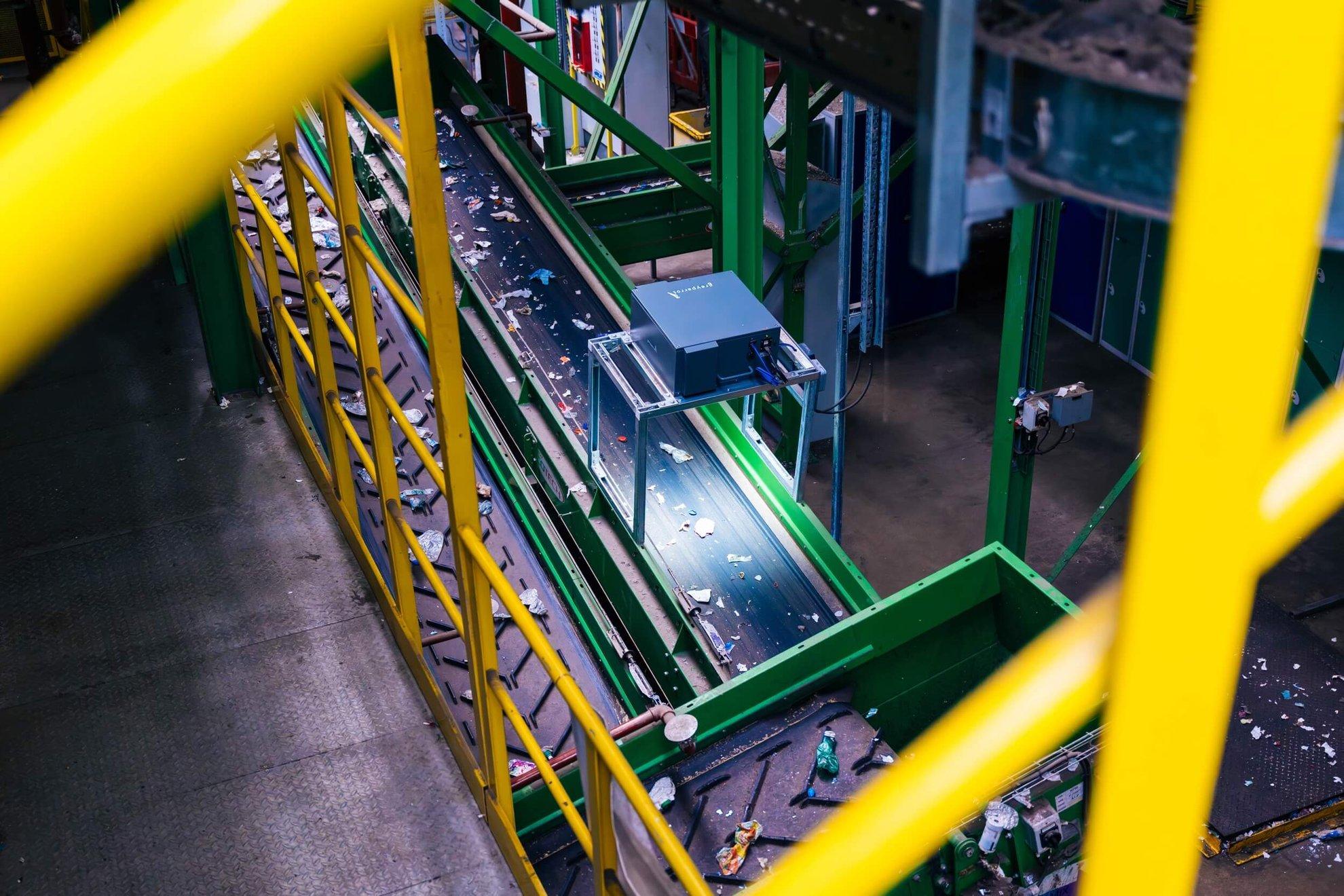
Material recovery facilities (MRFs) rely on conveyors, optical sorters, magnets, eddy current separators, shredders, screens, and balers. AIoT technologies improve throughput, sorting accuracy, equipment reliability, and recyclate quality.
AI Computer Vision for Material Sorting
AI vision systems analyze material streams moving through recycling equipment.
Applications include:
Material identification
Contamination detection
Plastic classification
Sorting accuracy improvement
Recycling quality analysis
Computer vision combined with machine learning models helps identify recyclable materials and detect unwanted items entering processing lines.
Recycling Line Monitoring and Throughput Analytics
AIoT systems continuously monitor recycling equipment, conveyor systems, and material flow to improve operational efficiency.
AIoT Applications
AI-powered monitoring provides continuous visibility across recycling operations.
Applications include:
Conveyor performance monitoring
Material throughput analysis
Equipment utilization tracking
Processing bottleneck identification
Production efficiency reporting
AI analytics improve operational visibility while helping facilities maximize equipment performance and material recovery.
Recyclate Purity Verification and Material Traceability
Recycling operators require reliable information about processed material quality and destination.
AIoT applications include:
Recyclate purity verification
RFID-based material batch tracking
End-market destination monitoring
Recycling output analytics
Customer reporting support
Electronic Waste (E-Waste) Processing AIoT Applications
Electronic waste processing involves collection, sorting, dismantling, recovery, and recycling of discarded electronic equipment. E-waste operations require accurate tracking because materials may contain valuable metals, regulated substances, and sensitive components.
AIoT technologies improve e-waste traceability, inventory management, processing visibility, and compliance documentation.
RFID-Based E-Waste Batch Tracking
RFID systems enable automated identification of electronic waste containers, pallets, and recovered material batches.
E-waste container tracking
Material recovery monitoring
Recycling batch identification
Processing history management
Destination verification
AI Vision for Electronic Waste Identification
AI computer vision systems automatically identify different categories of electronic devices entering recycling facilities.
AIoT applications include:
Device classification
Battery identification
Hazardous component recognition
Automated sorting support
Material recovery optimization
AI systems assist operators by recognizing electronic products, hazardous components, and recyclable materials before processing begins.
AI-Based Compliance and Chain-of-Custody Analytics
AI analytics improve visibility into regulated e-waste workflows.
Applications include:
Compliance record validation
Material movement analysis
Processing event monitoring
Recovery performance measurement
End-of-life destination tracking
Waste-to-Energy (WtE) Facility AIoT Applications
Waste-to-energy facilities convert waste materials into energy through controlled thermal or biological processes. These facilities require reliable monitoring of waste intake, material quality, equipment operation, and environmental conditions.
AIoT technologies support operational solution from waste receiving areas through processing equipment and compliance systems.
Waste Receiving and Feedstock Intelligence
AIoT-enabled waste receiving systems improve visibility into incoming materials.
Applications include:
Inbound waste load system
Tipping floor monitoring
Waste composition analysis
Storage capacity forecasting
Feedstock quality evaluation
Equipment and Process Monitoring
Connected devices provide data from conveyors, feeders, combustion systems, and supporting equipment.
Conveyors
Feeders
Combustion Systems
Supporting Equipment
Applications include:
Equipment condition monitoring
Conveyor performance analysis
Process anomaly detection
Predictive maintenance
Operational efficiency analysis
Environmental Monitoring and Compliance Analytics
WtE facilities require continuous environmental monitoring.
Monitoring
Analytics
Reporting
AIoT systems support:
Emission monitoring integration
Environmental device connectivity
Compliance reporting automation
Operational trend analysis
Regulatory data management
Yard Waste and Green Waste AIoT Applications
Yard waste operations manage seasonal organic materials including leaves, branches, grass clippings, and landscape waste. These operations experience significant volume changes throughout the year and require flexible collection and processing strategies.
AIoT technologies improve visibility across collection, transportation, and composting workflows.
Applications include:
Smart container fill-level monitoring
Seasonal waste volume forecasting
Collection route optimization
Fleet utilization monitoring
Compost temperature tracking
Organic material processing analytics
AIoT Technology Architecture for Waste and Recycling Operations
WasteOps AI solutions combine multiple technology layers to support connected waste management systems.
Cloud, Server, and Enterprise Integration Layer
Edge Computing Layer
Wireless Connectivity Layer
IoT Device Layer
WasteOps AI solutions combine multiple technology layers to support connected waste management systems.
IoT Device Layer
Waste operations use various connected devices, including:
GPS tracking units for collection vehicles
Smart bin fill-level devices
RFID tags for containers and material batches
BLE beacons for facility asset tracking
Weighbridge devices and load cells
Conveyor monitoring devices
Environmental devices
Landfill gas and leachate monitoring devices
AI cameras and computer vision systems
Wireless Connectivity Layer
Different waste environments require different communication approaches.
Common technologies include:
Cellular IoT for mobile fleets and remote facilities
LoRaWAN for distributed smart bin and environmental device networks
BLE for indoor asset visibility
RFID for identification and traceability
Industrial wireless networks for facility equipment
Edge Computing Layer
Edge processing enables real-time decision-making close to operational assets.
Applications include:
AI vision inspection at MRF sorting lines
Vehicle-based analytics
Local equipment anomaly detection
Real-time environmental alerts
Cloud, Server, and Enterprise Integration Layer
Waste management organizations require flexible deployment options.
AIoT system can integrate with:
Cloud-based fleet management platforms
Private servers for facility operations
ERP systems
GIS and route planning platforms
Maintenance management systems
Regulatory compliance applications
Weighbridge and tipping systems
WasteOps AI Technical Experience and Industry Support
WasteOps AI is created within Aperture Venture Studio, with support from GAO. Built on two decades of IoT experience, WasteOps AI incorporates practical knowledge from thousands of IoT customers and thousands of IoT projects across industrial and environmental applications.
The system reflects extensive engineering experience, research and development investment, quality assurance practices, and technical support capabilities delivered through remote and onsite expertise.
Supported by Ph.D. professionals from leading universities, technology specialists, and strategic partners, WasteOps AI applies proven IoT engineering approaches to waste collection, recycling operations, environmental monitoring, and resource recovery workflows.
Over the years, related IoT expertise has supported Fortune 500 companies, research organizations, universities, and government agencies requiring reliable connected technology solutions.
Building Intelligent Waste and Recycling Operations with AIoT
AIoT provides the foundation for connected waste management by linking collection fleets, containers, recycling equipment, material streams, environmental devices, and enterprise systems.
WasteOps AI helps waste organizations evaluate AI + IoT technologies based on operational requirements such as:
Smart waste collection optimization
Fleet productivity improvement
Recycling process system
Material traceability
Equipment reliability
Environmental monitoring
Compliance reporting
By combining AI analytics, IoT connectivity, wireless device technologies, and enterprise integration, WasteOps AI supports the development of scalable digital infrastructure for modern waste management and recycling operations.