AI + IoT Intelligence for Waste Management and Recycling Systems
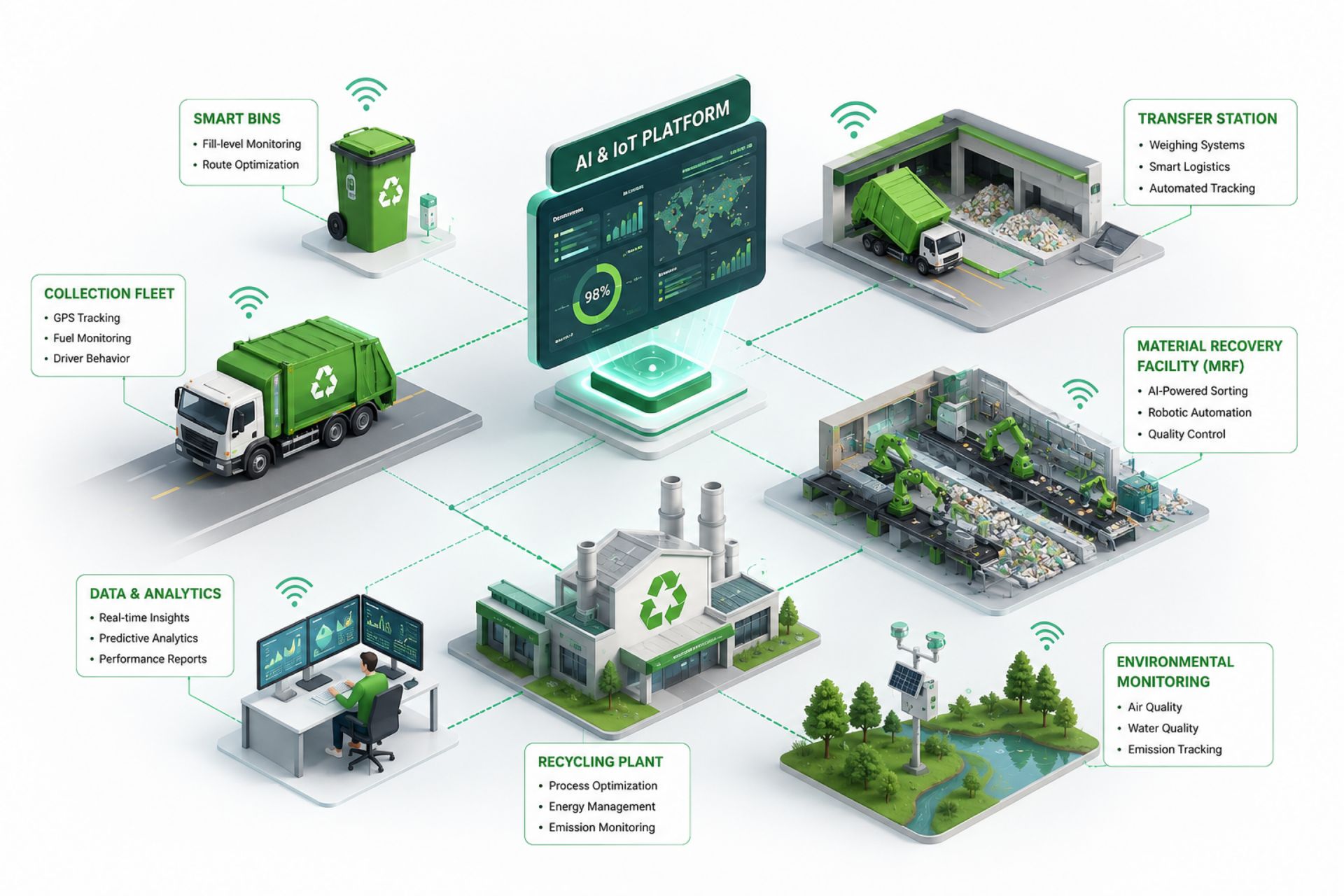
WasteOps AI combines AI, IoT device networks, wireless connectivity, and operational analytics to improve waste fleet performance, material recovery operations, material recovery facilities (MRFs), and landfill sites.
AI + IoT Intelligence for Waste Management and Recycling Systems
WasteOps AI provides an AIoT system designed for waste collection, recycling operations, material recovery facilities, transfer stations, and environmental management sites. The system combines AI models with IoT-connected devices to transform operational data from collection vehicles, waste containers, sorting equipment, material flows, and environmental devices into actionable system.
Waste management organizations increasingly operate across complex networks involving municipal solid waste collection, commercial waste services, recycling plants, landfill operations, and resource recovery facilities. These environments require continuous visibility into fleet activity, container utilization, equipment conditions, recyclable material movement, and regulatory compliance requirements.
WasteOps AI helps organizations connect physical waste assets with digital system through GPS tracking, RFID identification, BLE asset monitoring, LoRaWAN device networks, cellular IoT connectivity, edge computing, and cloud-based analytics. The result is improved operational awareness across collection routes, material recovery workflows, environmental monitoring processes, and waste lifecycle management.
The system supports municipal waste authorities, private waste haulers, recycling processors, industrial waste operators, and environmental service providers seeking AI-driven insights for operational planning and resource optimization.
AI Functions for AIoT-Enabled Waste & Recycling
Fleet and Equipment Intelligence
Waste collection fleets and recycling equipment represent critical operational assets requiring continuous monitoring and optimization. AI models analyze vehicle location data, telematics information, device readings, and operational patterns to improve fleet utilization and reduce unnecessary downtime.
AI-Driven Fleet Location Intelligence
AI-driven fleet location system combines GPS tracking data with operational analytics to provide visibility into collection vehicles, transfer equipment, and service routes. Waste operators can analyze vehicle movements, identify route deviations, evaluate service completion patterns, and improve dispatch decisions across multiple collection zones.
Predictive Equipment Health Monitoring
Predictive equipment health monitoring applies machine learning algorithms to equipment device data from collection vehicles, compactors, balers, conveyors, and heavy machinery. Early detection of abnormal vibration, temperature changes, operating cycles, or energy consumption patterns helps maintenance teams identify potential equipment issues before unexpected failures affect operations.
Dynamic Route Deviation Detection
Dynamic route deviation detection uses AI analysis of GPS and fleet data to identify unexpected route changes, missed collection areas, unauthorized stops, or operational inefficiencies. This capability supports better route compliance and improves service reliability.
AI-Based Container Placement Optimization
AI-based container placement optimization analyzes historical collection patterns, smart bin fill-level data, population density information, and service demand trends to support more effective placement of waste containers and recycling stations.
Smart Bin Sensor Fusion Analytics
Smart bin device fusion analytics combines data from fill-level devices, location systems, collection schedules, and environmental devices. AI models evaluate container usage patterns to support optimized pickup scheduling and reduce unnecessary collection trips.
Material Stock Intelligence
Recycling facilities and waste processing operations require accurate visibility into incoming waste streams, recyclable material volumes, and processing capacity. AI-powered material system helps operators understand material availability, composition, and operational demand.
AI-Powered Recyclable Volume Forecasting
AI-powered recyclable volume forecasting uses historical processing data, seasonal patterns, collection trends, and device information to predict future recyclable material volumes. Forecasting supports workforce planning, equipment scheduling, and facility capacity management.
Waste Stream Composition Analysis
Waste stream composition analysis applies AI models to identify patterns in incoming materials from municipal, commercial, industrial, and construction waste streams. Data-driven composition insights support better sorting strategies and recycling recovery improvements.
Landfill Airspace Consumption Prediction
Landfill airspace consumption prediction combines operational records, waste placement data, and environmental measurements to estimate landfill capacity utilization. This supports long-term landfill planning and resource management.
Sortation Throughput Demand Modeling
Sortation throughput demand modeling analyzes material flow rates, equipment performance, and processing schedules to help recycling facilities balance incoming loads with available sorting capacity.
Inbound Waste Load Intelligence
Inbound waste load system integrates weighbridge data, vehicle tracking information, and material records to provide operational visibility into incoming waste deliveries and facility workload.
Transfer Station Capacity Optimization
Transfer station capacity optimization uses AI analytics to evaluate vehicle arrivals, material accumulation rates, equipment utilization, and transfer schedules.
Processing Line Intelligence
Material recovery facilities depend on efficient sorting, conveying, and processing operations. AI-enabled monitoring provides visibility into production performance and operational conditions throughout recycling workflows.
AI-Based Sorting Line Throughput Monitoring
AI-based sorting line throughput monitoring analyzes device data from conveyors, optical sorting systems, and processing equipment to measure material flow performance.
Conveyor Flow Anomaly Detection
Conveyor flow anomaly detection identifies irregular material movement, blockages, unexpected slowdowns, and equipment performance issues using device analytics and AI pattern recognition.
Material Recovery Facility Process Tracking
Material recovery facility process tracking provides digital visibility into waste movement through sorting stages, allowing operators to analyze bottlenecks and improve facility efficiency.
Baler and Compactor Cycle Intelligence
Baler and compactor cycle system monitors equipment operating cycles, load patterns, and performance indicators to support maintenance planning and production optimization.
Material Chain Traceability
Waste and recycling operations increasingly require transparent tracking of materials from collection through processing and final destination. AI-powered traceability solutions combine RFID, GPS, IoT devices, and operational databases to create digital records throughout the waste lifecycle.
Chain-of-Custody AI Analytics
Chain-of-custody AI analytics evaluates movement records, transfer events, and processing information to improve material accountability.
Waste Manifest Compliance Intelligence
Waste manifest compliance system analyzes digital manifests, shipment records, and regulatory documentation to support environmental reporting requirements.
Recyclate Purity Verification AI
Recyclate purity verification AI combines device information and processing data to evaluate recyclable material quality and support improved recovery outcomes.
End-of-Life Material Destination Tracking
End-of-life material destination tracking provides visibility into where recovered materials are transferred, processed, reused, or disposed of.
Explore More for AI Functions for AIoT-Enabled for Waste & Recycling
IoT Software for AIoT-Enabled Waste & Recycling
Fleet and Asset Device Management
WasteOps AI provides IoT software capabilities for managing connected devices deployed across waste collection fleets, recycling facilities, transfer stations, and environmental monitoring locations.
Waste Collection Vehicle GPS Device Management
Waste collection vehicle GPS device management enables centralized configuration, monitoring, and maintenance of connected fleet tracking devices. The software manages location data streams, communication status, device health information, and operational connectivity.
Collection Fleet Telematics Software
Collection fleet telematics software integrates vehicle data from GPS units, onboard devices, cameras, and operational systems. It provides a unified software layer for analyzing driving behavior, vehicle utilization, route performance, and equipment status.
Smart Container Sensor Network Management
Smart container device network management enables operators to configure, monitor, and maintain connected fill-level devices deployed across waste bins, recycling containers, and collection points.
Heavy Equipment Onboard Device Software
Heavy equipment onboard device software supports connected machinery such as loaders, compactors, balers, and processing equipment through device integration and operational monitoring.
IoT Hardware Technologies for AIoT-Enabled Waste & Recycling
Connected Devices for Waste Operations
Waste management and recycling environments require rugged IoT hardware capable of operating across outdoor collection routes, processing facilities, transfer stations, and landfill environments. WasteOps AI integrates multiple sensing and identification technologies to capture operational data from vehicles, containers, processing equipment, and environmental systems.
GPS Tracking Units for Collection Vehicles
GPS tracking units for collection vehicles provide real-time location visibility for municipal waste trucks, commercial collection fleets, transfer vehicles, and specialized waste transport equipment. These devices support route monitoring, fleet utilization analysis, service verification, and operational reporting.
Smart Fill-Level Sensors for Waste Containers
Smart fill-level devices for waste containers measure container capacity using ultrasonic, infrared, weight-based, or combined sensing technologies. When connected through cellular, LoRaWAN, or other wireless networks, these devices provide real-time information about container utilization and collection demand.
RFID Tags for Waste and Recyclable Material Containers
RFID tags for waste and recyclable material containers enable digital identification and tracking throughout collection, sorting, processing, and transportation workflows. RFID-based identification supports automated asset recognition, chain-of-custody tracking, and recycling material traceability.
BLE Beacons for Material Recovery Facility Equipment
BLE beacons for material recovery facility equipment provide indoor asset visibility for carts, tools, mobile equipment, spare parts, and operational assets. BLE-based location systems help recycling facilities improve equipment availability and reduce asset search time.
Weighbridge Sensors and Load Cells
Weighbridge devices and load cells provide accurate weight measurements for incoming waste loads, recyclable material shipments, and transfer operations. Integration with AI analytics enables improved material volume forecasting and operational planning.
Landfill Gas and Leachate Monitoring Sensors
Landfill gas and leachate monitoring devices collect environmental data related to methane levels, temperature, pressure, liquid movement, and other landfill conditions. These devices support environmental monitoring, safety management, and regulatory reporting.
Vehicle-Mounted Cameras and LiDAR Systems
Vehicle-mounted cameras and LiDAR systems provide additional operational solution for collection vehicles and waste facilities. AI computer vision models can analyze road conditions, container conditions, illegal dumping events, and operational environments.
Tipping Area Floor Sensors and Facility Monitoring Devices
Tipping area floor devices and facility monitoring devices provide additional visibility into waste unloading activities, traffic patterns, and processing workflows.
Explore More for IoT Hardware Technologies for AIoT-Enabled for Waste & Recycling
AI-Enabled Wireless Technologies for Waste Operations
AI-Enhanced GPS Intelligence for Waste Fleet Operations
GPS connectivity combined with artificial system enables waste organizations to improve fleet management across collection routes, transfer operations, and disposal networks.
AI-Enhanced GPS Collection Route Optimization
AI-enhanced GPS collection route optimization analyzes vehicle locations, historical service data, traffic conditions, collection demand, and operational constraints to support improved route planning.
AI-Based Illegal Dumping Detection
AI-based illegal dumping detection combines GPS location information, vehicle cameras, geospatial analytics, and AI image processing to identify potential unauthorized disposal activities.
AI-Enabled Multi-Site Fleet Dispatch Analytics
AI-enabled multi-site fleet dispatch analytics provides operational visibility across distributed collection fleets, allowing dispatch teams to evaluate vehicle availability, service priorities, and regional workload distribution.
AI-Enhanced RFID Intelligence for Waste Material Traceability
RFID technology enables automated identification of waste containers, recyclable materials, and processing batches throughout the waste lifecycle.
AI-Enhanced RFID Waste Container Identification
AI-enhanced RFID waste container identification links physical containers with digital records containing location history, service records, inspection information, and operational status.
AI-Enabled Recyclable Material Batch Tracking
AI-enabled recyclable material batch tracking provides visibility into recovered materials moving through sorting, processing, storage, and shipment stages.
AI-Based Compliance Manifest Verification
AI-based compliance manifest verification analyzes RFID records, transportation documentation, and operational data to improve waste shipment tracking and regulatory compliance.
AI-Enhanced BLE Asset Tracking for Recycling Facilities
BLE-based asset tracking supports indoor and yard-level visibility across material recovery facilities, recycling plants, and transfer stations.
AI-Enabled BLE Recycling Equipment Tracking
AI-enabled BLE recycling equipment tracking helps operators monitor mobile equipment, processing tools, carts, and supporting assets.
AI-Enabled BLE Handheld Tool and Cart Monitoring
AI-enabled BLE handheld tool and cart monitoring improves availability of operational resources used for maintenance, inspection, and facility operations.
AI-Based Indoor Yard Asset Visibility
AI-based indoor yard asset visibility provides location awareness for assets operating across large recycling facilities and storage areas.
AI-Enabled LoRaWAN and Cellular Remote Monitoring
Remote waste and environmental sites often require low-power wireless connectivity capable of supporting distributed device networks.
AI-Enabled LoRaWAN Landfill Sensor Networks
AI-enabled LoRaWAN landfill device networks provide long-range connectivity for landfill monitoring devices measuring gas, temperature, moisture, and environmental conditions.
AI-Enabled Cellular Smart Container Monitoring
AI-enabled cellular smart container monitoring supports connected waste containers located across urban and industrial environments where direct network infrastructure may not be available.
AI-Enabled LoRaWAN Leachate Pond Monitoring
AI-enabled LoRaWAN leachate pond monitoring provides remote visibility into environmental conditions at landfill water management systems.
AI-Enabled Cellular Transfer Station Monitoring
AI-enabled cellular transfer station monitoring supports remote monitoring of distributed waste handling locations and operational equipment.
AI-Based Environmental Sensor Intelligence
Environmental monitoring is a critical component of modern waste management operations. AI analytics combined with IoT devices help organizations detect changes, identify risks, and improve environmental management practices.
AI-Based Landfill Methane Emission Monitoring
AI-based landfill methane emission monitoring analyzes device readings, historical patterns, and operational conditions to support emission tracking and environmental reporting.
AI-Based Compost Temperature Monitoring
AI-based compost temperature monitoring evaluates temperature trends, moisture conditions, and biological process indicators for organic waste processing operations.
AI-Based Wastewater Leachate Detection
AI-based wastewater leachate detection combines device networks and analytics to identify abnormal environmental conditions associated with waste processing sites.
Integration for Waste & Recycling Operations
Cloud Deployment for Waste Operations
WasteOps AI supports cloud deployment system for organizations requiring centralized visibility across multiple waste collection regions, recycling facilities, and environmental sites.
SaaS Fleet and Asset Tracking Platforms
SaaS fleet and asset tracking systems provide centralized access to vehicle locations, equipment conditions, device data, and operational analytics.
Cloud-Based MRF Inventory Intelligence
Cloud-based MRF inventory system connects material processing data, device information, and facility analytics into a unified operational environment.
Multi-Site Cloud Operations Dashboards
Multi-site cloud operations dashboards provide enterprise-level visibility across collection networks, recycling facilities, transfer stations, and landfill operations.
Cloud Compliance and Reporting Portals
Cloud compliance and reporting portals support environmental documentation, operational reporting, and regulatory data management.
Server Deployment for Waste Facilities
Some waste and recycling organizations require local infrastructure for operational control, data security, or connectivity requirements.
On-Premise Servers for Material Recovery Facility Asset Tracking
On-premise servers for material recovery facility asset tracking support local processing environments where real-time operational data must remain within facility networks.
Private Server Deployments for Fleet Intelligence
Private server deployments for fleet system enable organizations to maintain internal control over fleet and operational analytics.
Air-Gapped Landfill Operations Servers
Air-gapped landfill operations servers support isolated environments where environmental monitoring systems require restricted connectivity.
Enterprise Servers for Recyclable Material Traceability
Enterprise servers for recyclable material traceability provide local processing capabilities for organizations managing sensitive material flow information.
Middleware and Data Orchestration
Waste operations typically involve multiple equipment vendors, device systems, fleet systems, and enterprise applications. Middleware provides the data integration layer required for AIoT deployments.
Waste Fleet Telematics Middleware
Waste fleet telematics middleware connects vehicle tracking systems, operational software, and AI analytics systems.
Material Recovery Facility Sensor-to-Platform Data Brokering
Material recovery facility device-to-system data brokering collects information from conveyors, sorting equipment, RFID readers, and environmental devices.
Multi-Vendor IoT Protocol Normalization
Multi-vendor IoT protocol normalization enables integration between different device manufacturers and communication standards.
Edge-to-Cloud Waste Data Pipelines
Edge-to-cloud waste data pipelines transfer operational information from field devices to AI processing environments while supporting real-time analytics.
Edge Intelligence and On-Site Processing
Waste facilities often require immediate operational decisions without depending entirely on remote cloud processing.
On-Site AI Inference for Sorting Lines
On-site AI inference for sorting lines enables real-time analysis of material streams, equipment performance, and processing conditions.
Edge Computing for Collection Vehicle AI
Edge computing for collection vehicle AI supports onboard analytics for cameras, devices, and route systems.
Landfill Edge Node Deployment
Landfill edge node deployment enables local processing of environmental device information and operational alerts.
Real-Time Alerting at Transfer Station Edge Systems
Real-time alerting at transfer station edge systems provides immediate notifications for equipment issues, environmental conditions, and operational exceptions.
Interoperability and System Connectivity
AIoT systems for waste management must integrate with existing operational technology and enterprise software systems.
ERP Integration for Waste Inventory Systems
ERP integration for waste inventory systems connects material records, operational planning, procurement, and reporting workflows.
GIS and Route Planning System Connectivity
GIS and route planning system connectivity combines geospatial information with fleet system and collection optimization.
Regulatory Compliance System Interoperability
Regulatory compliance system interoperability supports data exchange with environmental reporting systems and government systems.
Weighbridge and Tipping Software Integration
Weighbridge and tipping software integration connects material weight information with operational analytics and traceability systems.
Explore More for Integration for Waste & Recycling
Waste & Recycling AIoT Applications
WasteOps AI supports AIoT applications across collection, recycling, processing, and environmental management operations.
Municipal Solid Waste Collection
AIoT solutions improve municipal collection operations through smart container monitoring, GPS fleet system, route optimization, and service verification.
Connected waste containers provide fill-level information while AI analytics help determine efficient collection schedules.
Hazardous Waste Handling and Tracking
AI + IoT technologies support hazardous waste operations through digital identification, environmental monitoring, location tracking, and compliance documentation.
RFID tracking, device monitoring, and AI analytics improve visibility into hazardous material movement and storage conditions.
Construction and Demolition Waste Processing
Construction waste recycling facilities use AIoT systems to monitor incoming materials, equipment operations, sorting processes, and recovered material flows.
IoT devices and AI analytics improve material classification, processing efficiency, and recycling reporting.
Industrial and Commercial Waste Fleet Operations
Industrial waste operators use connected fleet systems to monitor vehicles, containers, service routes, and customer locations.
AI analytics support operational planning, fleet utilization improvement, and service management.
Organics and Compost Processing Facilities
AIoT systems monitor compost temperature, moisture conditions, processing stages, and environmental factors.
Sensor-based monitoring helps operators maintain consistent composting conditions and improve process visibility.
Single-Stream Recycling Operations
Material recovery facilities use AI vision systems, RFID tracking, IoT devices, and equipment monitoring to improve sorting efficiency and material recovery performance.
Electronic Waste Processing
E-waste facilities use AIoT technologies for asset identification, material tracking, equipment monitoring, and recycling chain visibility.
Waste-to-Energy Facility Monitoring
Waste-to-energy facilities use connected devices and AI analytics to monitor equipment conditions, material inputs, and operational performance.
Yard Waste and Green Waste Operations
Connected monitoring systems support collection planning, compost processing, and environmental condition tracking for green waste operations.
Built on Decades of AIoT and Industrial Innovation
WasteOps AI is developed within Aperture Venture Studio with support from GAO, building on two decades of experience in IoT solutions and industrial deployments. The system reflects practical knowledge gained from thousands of IoT customers and thousands of IoT projects across environmental operations, connected assets, and industrial monitoring environments.
WasteOps AI incorporates engineering expertise, research and development investment, quality assurance processes, and technical support capabilities delivered remotely and onsite. The system is supported by professionals with advanced technical backgrounds and collaborations involving experienced technology specialists and strategic partners.
Through these capabilities, WasteOps AI supports organizations including Fortune 500 companies, research organizations, universities, and government agencies requiring reliable AIoT solutions for complex operational environments.
Years of IoT Experience
Industrial knowledge developed through long-term IoT research, engineering, and deployment experience.
Connected Intelligence
Artificial system, IoT devices, wireless connectivity, edge systems, and operational analytics.
Deployment Support
Architecture planning, device selection, integration, quality assurance, and technical support.
Operational Reach
Support for enterprises, research organizations, universities, government agencies, and industrial operators.
Let’s Build Smarter Waste Operations
Connect with WasteOps AI to explore AIoT system for waste collection, recycling operations, material recovery facilities, environmental monitoring, and connected waste management systems.
WasteOps AI helps organizations evaluate IoT device selection, wireless connectivity options, AI analytics requirements, integration approaches, and deployment strategies for modern waste and recycling operations.
- Waste collection and fleet system
- Smart containers and device networks
- Recycling and material recovery systems
- Environmental monitoring operations
- RFID and material traceability
- Edge, cloud, and server integration